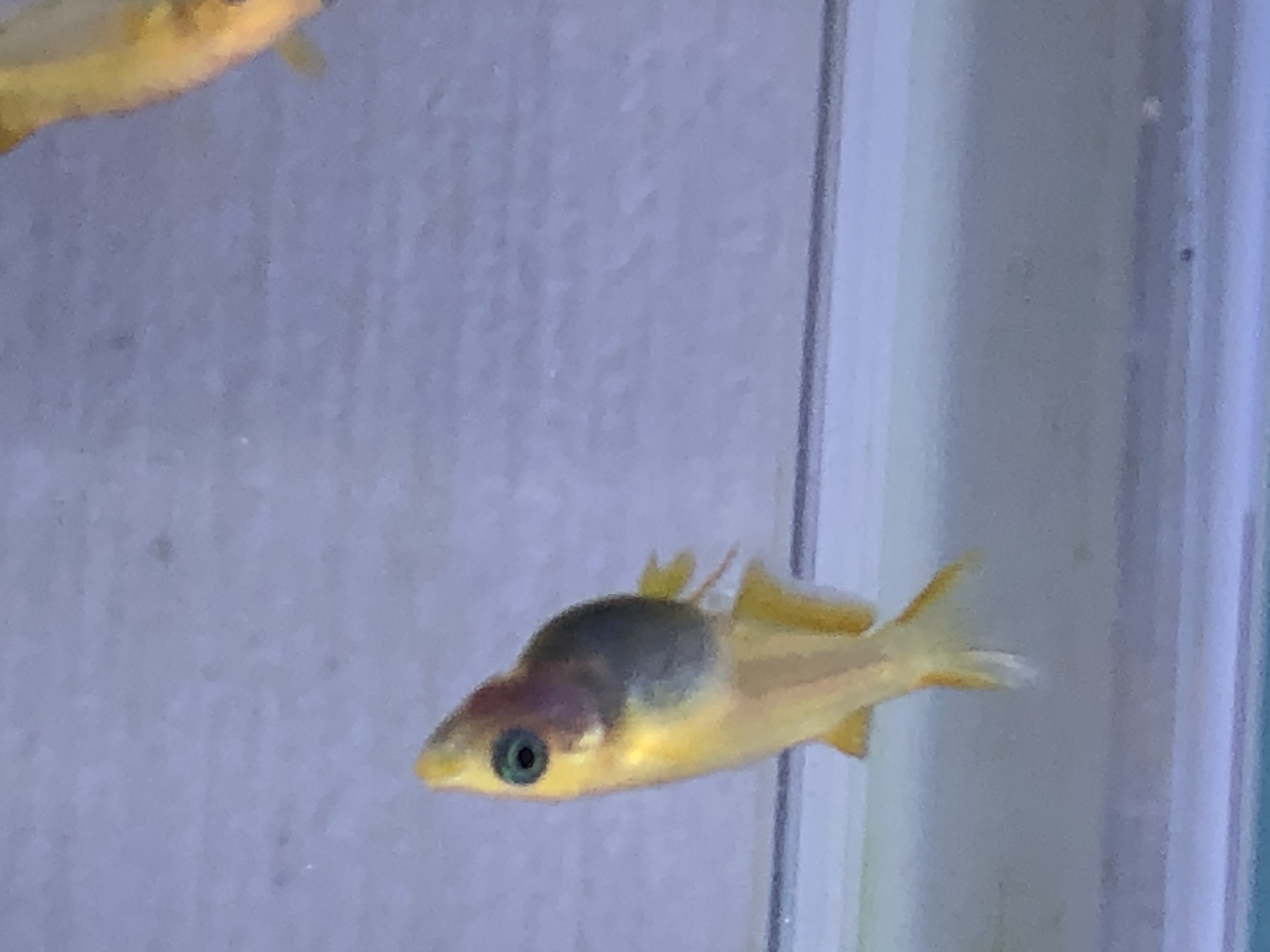
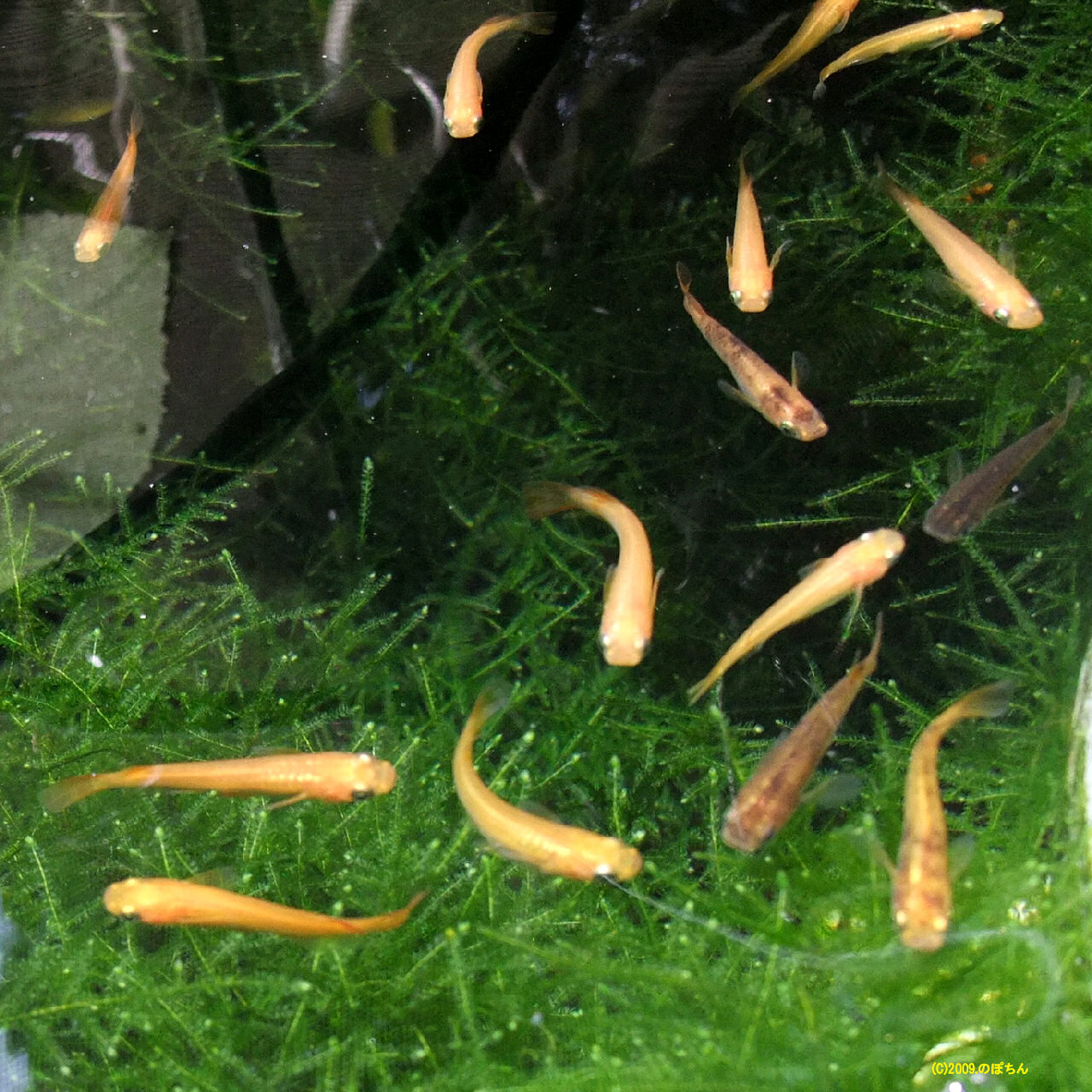
A small freshwater fish
Common medaka are roughly 3–4 cm long, with an upturned mouth suited to feeding near the surface. They are also important research animals in Japan. An ornamental “strain” is not necessarily a separate biological species.
[Kameda Fish Farm] [NBRP / National Institute for Basic Biology]
Watch the group, and the individual
Fish may swim together but can also chase one another. A fish that repeatedly hides or misses food deserves attention. Provide refuge and consider separating a persistently harassed individual.
A surprising social skill
University of Tokyo and Okayama University researchers found that medaka use facial information to distinguish other fish in experiments. This does not establish that every pet medaka recognises its human keeper.
Try a three-minute observation
Spend one minute looking from above, one from the side, and one observing a small meal. Record swimming, eating and social behaviour. A weekly photo from the same angle gives you a useful visual diary without repeated handling.
What changed today?
- Normal swimming and balance
- Each fish gets access to food
- No repeated targeting of one fish
- Record changes from yesterday
References & editorial context
Sources checked on 26 September 2026. Practical recording and Thailand callouts are editorial suggestions; they are not reported Thai trial results. Source organisations have not reviewed or endorsed this article.